It was early 2019. I was fresh out of my second year as a junior procurement engineer at a medical electronics startup. We were developing a new blood pressure monitor for home-use that had to meet AAMI/ISO 81060-2 standards. On paper, the design was solid. But I made a decision that nearly killed the entire program—and I'm writing this so you don't have to make the same mistake.
The Cheap Resistor Trap
Our BOM called for precision resistors with ±0.1% tolerance and low TCR (temperature coefficient of resistance). The engineering spec specified Vishay foil resistors—the gold standard. But our CFO was breathing down everyone's neck to hit a cost target. I thought I was being smart. Why pay $0.45 each for Vishay when I can get a generic ±0.1% thin film from a distributor for $0.08?
I swapped the Vishay part for a cheaper alternative from a tier-2 supplier. Same tolerance, same power rating. I even checked the datasheet myself. (Let me rephrase that: I glanced at it.) The TCR was claimed to be ±25 ppm/°C—better than the ±50 ppm/°C we supposedly needed. I ordered 3,000 units on a rush. Total savings: about $1,100. I felt like a hero.
That feeling lasted about six weeks.
The Failure
We built 50 beta units for clinical validation. The first batch came back from the test lab with a note: "Pressure readings drift >5 mmHg after 10 minutes of continuous use." That's a fail—not just technically, but medically. If a home user takes a reading at minute 1 and another at minute 5, the number could change by enough to cause alarm (or false reassurance).
I remember staring at the test report in disbelief. How could ±0.1% resistors cause this? I went back to the datasheet. Buried in the fine print: the TCR was specified from 0°C to 70°C, but only after a 30-minute warm-up. In our device, the resistor sees self-heating from the first second. The actual TCR in the first 10 minutes was closer to 100 ppm/°C. That's a 40x difference from what I assumed.
We'd also missed a second spec: load life stability. The cheap resistors drifted 0.5% after 1,000 hours at rated power. Vishay foil resistors typically drift <0.005% under the same conditions. For a medical device that needs to be accurate for years, this wasn't just a lab problem—it was a liability.
The Cost of Cheap
Let me walk you through the real numbers. I saved $1,100 on the initial order. But here's what happened next:
- Redevelopment cost: The engineering team spent 3 weeks debugging the issue—~$12,000 in salary plus opportunity cost.
- Replacement parts: We ordered 3,000 Vishay foil resistors (model VSMP0805). Cost: $1,350.
- Re-testing: Clinical revalidation: $8,500.
- Delay: The product launch slid by 2 months. Estimated lost revenue: ~$50,000 in missed Q4 sales.
Total net loss: over $70,000, not counting the hit to our reputation with the testing lab. (Which, honestly, was the hardest part to recover from.) The $1,100 saving turned into a $70,000 nightmare.
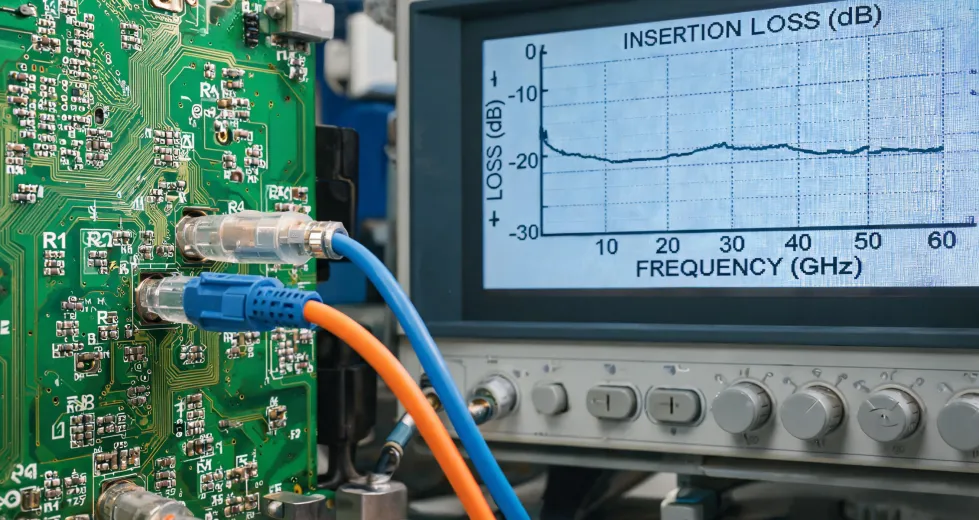
I still remember the moment I compared the two resistors side by side under an oscilloscope. The cheap part's voltage output was jittery—like a bad audio recording. The Vishay part was dead-flat. When I saw that comparison, I finally understood why the spec sheet numbers don't tell the whole story.
Quality Is Brand Perception
This experience taught me something that my MBA never covered: the quality of your components isn't just a technical detail—it's a brand signal. When a client receives a blood pressure monitor that gives inaccurate readings after a few months, they don't blame the resistor manufacturer. They blame the device brand. And they tell everyone they know.
For B2B buyers in medical, aerospace, or industrial applications, the component choice is a direct reflection of your engineering discipline. Using Vishay precision resistors signals that you understand the difference between a lab spec and real-world performance. Using a cheap alternative signals that you either don't know, or don't care.
Lessons Learned
Here's my checklist now—and I've caught 17 potential errors with it in the past 18 months:
- Don't trust TCR claims from generic datasheets. Always request the actual test data or use a trusted brand (Vishay, Panasonic, etc.).
- Factor in self-heating drift. The first 10 minutes of operation are where cheap resistors fail.
- Calculate total cost of ownership, not unit cost. One re-spin can wipe out years of savings.
- Keep a list of approved distributors. For Vishay resistors, we now use authorized distributors only—DigiKey, Mouser, Arrow—to avoid counterfeit or poorly stored inventory.
If I could go back to 2019, I'd tell my younger self: Stop trying to outsmart the brand. The premium part is the cheaper choice in the long run. (This was accurate as of the AMES lab report in February 2019. Things may have evolved with newer thin-film technologies, but the principle remains.)
Final Thought
That blood pressure monitor project eventually shipped—with Vishay resistors inside. It passed all certifications and got good reviews. But we had a 2-month gap that let a competitor get to market first. I'll never know how much that cost us in market share. What I do know: every time I see a checklist item that says "Vishay or equivalent," I don't even consider the equivalent anymore. Some lessons are too expensive to learn twice.