-
Vishay Component Sourcing: A Checklist That Actually Prevents Mistakes
-
Step 1: Nail Down the Exact Legal Entity Name
-
Step 2: For Precision Resistors, Tolerance Is Only Half the Story
-
Step 3: Verify Package Variants—"2660 Flip" and Similar Traps
-
Step 4: For Potentiometers, Mechanical Life Beats Electrical Specs
-
Step 5: Run Samples Through Your Actual Process, Not a Lab Bench
-
Step 6: Calibrated Test Gear Is Your Cheapest Insurance
-
Step 7: Lock In Lead Times Before You Confirm
-
Common Mistakes and Final Notes
-
Step 1: Nail Down the Exact Legal Entity Name
Vishay Component Sourcing: A Checklist That Actually Prevents Mistakes
If you're specifying Vishay components—foil resistors, potentiometers, sensors—and you haven't done it at volume before, this is for you. I've processed 300+ component orders over 8 years. About six of them went badly. Total damage: roughly $4,200 in rework, expedite fees, and scrapped parts. These days my team runs this checklist before any PO goes out.
Seven steps. None takes more than 15 minutes.
Step 1: Nail Down the Exact Legal Entity Name
This sounds bureaucratic until it costs you a week. Vishay operates through multiple entities—Vishay Intertechnology, Vishay Dale Electronics Inc, and product divisions like Vishay/Spectrol. If your BOM or PO uses the wrong name, shipping and invoicing can get messy.
In my first year (2017), I sent one PO to "Vishay Dale" and a colleague sent another to "Vishay Intertechnology" for the same build. Both shipped. We paid for both. It took three weeks and two finance meetings to unwind.
Checkpoint: Copy the entity name directly from your quote or invoice into the BOM. Don't retype it from memory.
Step 2: For Precision Resistors, Tolerance Is Only Half the Story
This one hurt. In early 2019 I ordered a batch of precision foil resistors, ±0.01% tolerance. Data sheet looked great. I approved it. What I missed: that tolerance was specified at 25°C. Temperature coefficient (TCR) wasn't in my spec. The final assembly drifted out of spec whenever ambient temperature shifted.
The upside was saving maybe $400 by not running a second qualification round. The risk was reworking 1,200 boards if the parts drifted. I kept asking myself: is $400 worth potentially eating a $3,800 rework bill? It wasn't. I learned that the hard way.
For high-precision applications—anything from test equipment to high-end audio like Infinity loudspeaker crossovers—TCR and long-term drift matter more than the headline tolerance number.
Checkpoint: On the data sheet, find the TCR spec and the operating temperature range it's rated over. If the supplier can't tell you both, get a different supplier.
Step 3: Verify Package Variants—"2660 Flip" and Similar Traps
If your BOM has a package code like "2660 flip" or an abbreviation your supplier uses internally, don't assume they'll interpret it the way you intended. "Flip" could mean flip-chip, flipped pinout, or just a vendor-specific naming convention.
I got burned in 2021. A rep read "2660 flip" on our notes and ordered what he thought we meant. Pinout didn't match our PCB footprint. Fifty pieces, all wrong.
Checkpoint: Copy the package dimensions and pinout diagram from the supplier's data sheet directly into your BOM notes. No shorthand. No assumptions.
Step 4: For Potentiometers, Mechanical Life Beats Electrical Specs
Vishay/Spectrol potentiometers look great on paper electrically. But mechanical life—rotation cycles—is where you get surprised. We had a product going through 500 calibration cycles before shipment. The Spectrol part was rated for 10,000 cycles, so I thought we had margin.
What I didn't account for: our automated test fixture rotated the shaft faster than a human would. Mechanical wear showed up early. We caught it during reliability testing, six weeks too late.
Checkpoint: Estimate your real-world cycle count at real-world speed, add 20%, then check the spec. If the margin is thin, order spares for testing.
Step 5: Run Samples Through Your Actual Process, Not a Lab Bench
In summer 2020 we ordered 1,000 Vishay sensors. Bench-tested fine. Ran them through production—reflow profile was slightly different than our test setup—yield dropped to 88%. Not catastrophic, but the rework ate a week.
Looking back, I should have run the samples through the full line, not just the lab. At the time, the lab seemed faster and cheaper. It wasn't.
Checkpoint: Whatever process your production line uses—soldering, cleaning, thermal cycling—run samples through that exact sequence before you commit to a volume order.
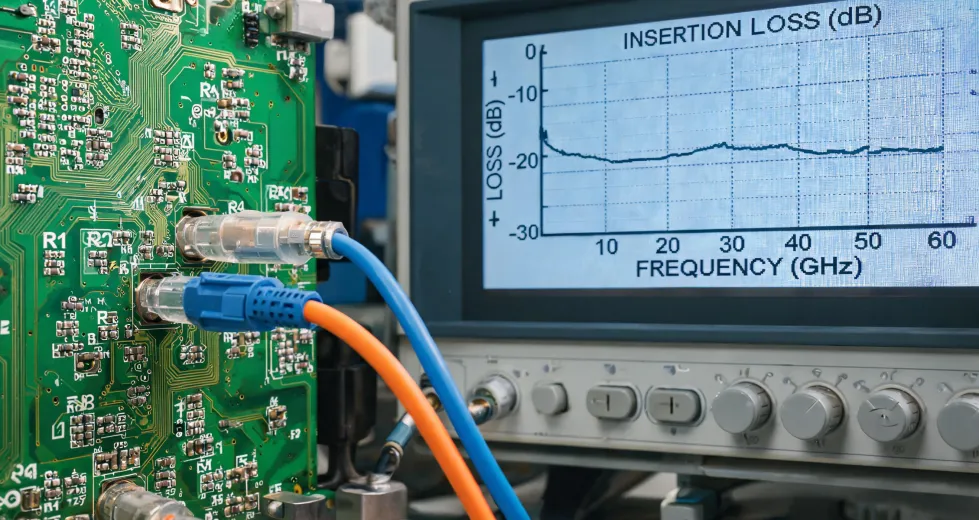
Step 6: Calibrated Test Gear Is Your Cheapest Insurance
This is the step most people skip. You've got a multimeter that's been on the shelf for three years. It reads fine. But if you're certifying resistor accuracy to ±0.01%, a handheld meter with unknown calibration is basically a guess.
At minimum, use a benchtop meter with a current calibration sticker. For field checks, a good handheld matters—the "Klein vs multimeter" debate is worth reading if you're choosing one—but honestly, the brand matters less than whether it's been calibrated recently.
Checkpoint: Before you trust a measurement, verify the instrument's calibration date and accuracy spec at the range you're using.
Step 7: Lock In Lead Times Before You Confirm
If the supplier says 10-week lead time and you need parts in 6, you have three options: order earlier, find an alternative, or push the build. Pick one. Write the date in the PO notes.
We had a $600 order sit for 11 weeks because nobody flagged the mismatch between quoted lead time and our production schedule. The expedite fee to fix it was $450.
Checkpoint: Cross-check quoted lead time against your production calendar before you hit "confirm."
Common Mistakes and Final Notes
I have mixed feelings about checklists. On one hand, they can feel like busywork. On the other, every single item above came from a real mistake that cost real money.
Most of these problems are preventable if you slow down for 15 minutes before ordering. A few things I still see people miss:
- Using shorthand for entity names ("Vishay" alone isn't specific enough)
- Approving samples from a lab, then skipping validation on the production line
- Asking about price but not lead time
- Not separating incoming shipments by entity or division—matters for warranty and traceability
To be fair, some of this is overkill for hobby projects or one-off builds. But if you're sourcing at volume, a 15-minute checklist beats a three-hour root cause analysis every time.
I'd rather spend the 15 minutes.