-
Quick answers for buyers who landed here by accident
-
1. What is Vishay, and what does Vishay actually make?
-
2. What is the Vishay BPW34, and what is it used for?
-
3. Are Vishay products used in networks?
-
4. Can I use a Vishay BPW34 for blood pressure measurement?
-
5. How do I turn on a Verizon flip phone?
-
6. Do I need to order huge volumes to buy Vishay parts?
-
7. What mistakes should I avoid when sourcing Vishay components?
Quick answers for buyers who landed here by accident
I've been handling component sourcing orders for 8 years. I've personally made (and documented) 11 significant mistakes, totaling roughly $14,000 in wasted budget. Now I maintain our team's pre-order checklist. This FAQ is built from the questions that keep hitting my inbox: what Vishay actually makes, what the Vishay BPW34 is for, whether Vishay products show up in networks, why people confuse BPW34 with blood pressure sensing, and yes, how to turn on a Verizon flip phone.
I don't have hard data on how many buyers land on a component page looking for consumer device help, but based on our order history, it happens enough that we added a checkbox to our intake form. Here's the short version of what I tell them.
1. What is Vishay, and what does Vishay actually make?
Vishay Intertechnology is a global manufacturer of discrete semiconductors and passive electronic components. The company was founded in 1962 and is headquartered in Malvern, Pennsylvania. According to Vishay's official site (vishay.com), its portfolio includes resistors, capacitors, inductors, diodes, MOSFETs, optoelectronics, sensors, and power management components.
So when you search for Vishay products, you're usually looking at parts that go inside another product, not a finished consumer device. That distinction matters. Vishay is not a phone brand. It is not a network service provider. It is a component supplier for engineers, procurement teams, and manufacturers.
In my first year, I made the classic category mistake: treated Vishay like a consumer electronics brand. I asked a supplier for a Vishay power adapter. Wrong question. The right question was which Vishay component was inside the adapter. Cost me a wasted afternoon and a slightly embarrassed email.
2. What is the Vishay BPW34, and what is it used for?
The Vishay BPW34 is a silicon PIN photodiode. According to the Vishay BPW34 datasheet (available at vishay.com), it has a spectral range of roughly 430 to 1100 nm with peak sensitivity around 950 nm. It converts light into current, which makes it useful for light meters, optical switches, infrared sensing, pulse detection, and similar light-sensing jobs.
From the outside, all BPW34s look like the same black plastic package. The reality is that the suffix and filter options matter. If you don't check the exact orderable part number, you can end up with a different package, a daylight filter, or a different sensitivity curve.
In my first year, I made the classic suffix mistake: assumed a BPW34 variant was drop-in with the base part. Cost me a $600 redo and a one-week delay. I said 'Vishay BPW34.' The supplier heard a different suffix. Result: wrong footprint. That's when I learned to copy the full part number from the datasheet, not from memory.
(note to self: update our BPW34 checklist)
3. Are Vishay products used in networks?
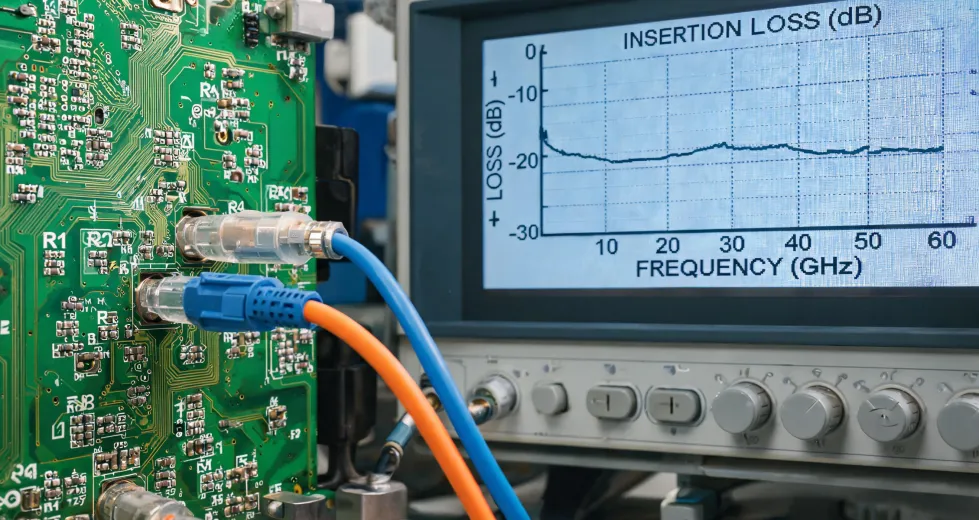
Yes, but not in the way most people mean. You won't see a Vishay logo on a router. You will find Vishay components inside networking equipment: precision resistors, capacitors, inductors, TVS diodes, MOSFETs, and optoelectronics. These parts help with signal integrity, power conversion, protection, and thermal management in switches, base stations, and data center hardware.
It's tempting to think any component with the right voltage rating can go into a network board. But networks are unforgiving. A small tolerance drift or a weak protection part can cause intermittent failures that are painful to debug. I once approved a substitute resistor for a network card because the resistance matched. I ignored the temperature coefficient. Three months later, we had field returns. Not fun.
If you're sourcing for networks, check the full electrical spec, not just the headline value. That's been my experience with industrial and telecom orders, though consumer networking gear may have different constraints.
4. Can I use a Vishay BPW34 for blood pressure measurement?
No. A blood pressure monitor measures pressure. The BPW34 measures light. It is a photodiode, not a pressure sensor. If you need blood pressure sensing, look at pressure sensor portfolios and medical-grade components, not an optical part.
This comes up because optical sensors do appear in some medical devices. Pulse oximetry uses light to estimate oxygen saturation. But blood pressure cuffs use pressure transducers, analog front ends, and calibration. Mixing those categories is an expensive mistake. For medical devices, the relevant standard family is IEC 60601. Verify current requirements at the official source and with your regulatory team.
I don't have hard data on how many design reviews catch this, but based on our order history, it happens enough that we added a checkbox to our intake form. It asks: 'Is this an optical measurement or a pressure measurement?' Simple, but it has saved us at least two wrong-sample orders.
5. How do I turn on a Verizon flip phone?
This is not a Vishay question, but it lands in our inbox anyway. If you searched for how to turn on Verizon flip phone, here's the short answer: for most Verizon flip phones, press and hold the Power/End Call key for about 2 to 3 seconds. If the screen stays dark, charge the phone for at least 30 minutes with a known-good charger. If it still won't turn on, remove the battery if it is removable, reinsert it, and try again. If that fails, contact Verizon support (verizon.com/support) with your model number.
Why include this? Because search traffic mixes intents. Someone looking for how to turn on a Verizon flip phone can end up on a component supplier page. Vishay does not make consumer phones. It makes components inside electronics. If you need device support, use the device manufacturer's manual or carrier support page. If you need a component datasheet, use the manufacturer's official site.
6. Do I need to order huge volumes to buy Vishay parts?
No. You do not need to buy a million pieces directly from Vishay. Authorized distributors like Digi-Key, Mouser, and Newark sell cut tape (i.e., a partial reel sold in smaller quantities) and break reels for many parts. Minimum order quantities vary by distributor and by part number, but small orders are normal.
Small doesn't mean unimportant—it means potential. When I was starting out, the vendors who treated my $200 orders seriously are the ones I still use for $20,000 orders. A good supplier will not make you feel stupid for ordering 10 pieces. They may charge more per piece because of cut tape and shipping, but that is a pricing issue, not a service issue.
We've done maybe 200 Vishay line items. Maybe 180, I'd have to check the system. The pattern is consistent: the distributors who handle small orders well are the ones we keep. If a supplier refuses to quote a small order, that tells you something about how they will treat you later.
7. What mistakes should I avoid when sourcing Vishay components?
First, copy the full orderable part number. The base family name is not enough. BPW34 is a good example. Suffixes can change package, filter, tolerance, or temperature range.
Second, check the datasheet revision and date. If I remember correctly, we once used a 2019 datasheet for a 2023 build. The lead time was about two weeks, though I might be misremembering. The problem was not the lead time. The problem was a changed specification that we missed.
Third, buy from authorized distribution. Counterfeit and out-of-spec parts are a real risk in the component market. The lowest price on an open marketplace is not worth the rework cost.
Fourth, build a checklist. Our current pre-order list has 14 items. It has caught wrong suffixes, missing RoHS flags, and one order with the wrong packaging option. That one would have been a $1,200 mistake. The checklist took an hour to build. Worth it.
Finally, don't assume. Ask. A two-minute email to an authorized distributor is cheaper than a two-week production delay. I learned that one the hard way.