The label said '100% compatible.' My gut said otherwise.
Last Q1, we received our first batch of 240 Infinera-compatible XFP transceivers. I should say 'compatible' — that word is written into our procurement contract, circled twice by legal. When I cut the first carton open and saw the familiar blue ESD bag, my honest first thought was: this shouldn't be a big deal. XFP is a 2000s-era form factor. We've all seen it. Plug it in, verify the link, sign the receiving report.
That assumption almost cost me a redo on a 50,000-unit annual order.
What I actually found inside the box
My role is quality and brand compliance. I don't design networks — I review what arrives before it reaches our field engineers. In 2023 alone I rejected 14% of first deliveries across three product categories, and I've been called 'the bottleneck' by at least two vendors. I take that as a compliment.
The XFP batch arrived in late February. Visually, everything looked fine. But when I ran a sample of 12 units through our bench, two failed the receive-sensitivity check. They were off by roughly 1.2 dB against the spec sheet we'd signed off on. In normal tolerance that's a rounding error. At 10G over 20 km, that's margin you don't want to lose.
"The vendor replied that the units were 'within industry standard.' I asked which industry standard. They sent back a datasheet with a different revision date."
We rejected the batch. They redid it at their cost. And I rewrote our receiving spec to require serial-level test data on XFP optical parameters — not just a certificate of conformity.
The side-by-side test that changed my mind
Here's where it gets interesting. After the rejection, I did something we hadn't done before: I put six Infinera-compatible XFPs from the rejected lot next to six from a prior approved shipment, and I ran them through the same chassis with blind labeling. I didn't know which was which until the results were tallied.
Four of the six rejected units still linked up. They 'worked.' But when I looked at the DOM (digital optical monitoring) readings, the transmit power variance between units was almost double what I saw in the approved lot. That's the kind of thing that doesn't show up in a pass/fail test — but it does show up in the field when a module degrades early.
I don't have hard data on field failure rates for that specific batch — we rejected it, so we never deployed it — but based on four years of reviewing optical components, my sense is that tight unit-to-unit consistency is what separates a good compatible vendor from a cheap one.
What most people don't see about 'compatibility'
Infinera is a company known for its DTN and DWDM platforms, headquartered in San Jose. When people ask 'what is an Infinera-compatible transceiver,' the honest answer is: it's a module designed to interoperate with Infinera's optical line systems without being manufactured by Infinera. That's a broad definition. The problem is that 'compatible' gets treated as a binary — it works or it doesn't.
It isn't binary. It's a spectrum that runs from 'powers up and links' to 'meets every electrical, optical, and mechanical spec across the full operating temperature range.' Most buyers only check the first box.
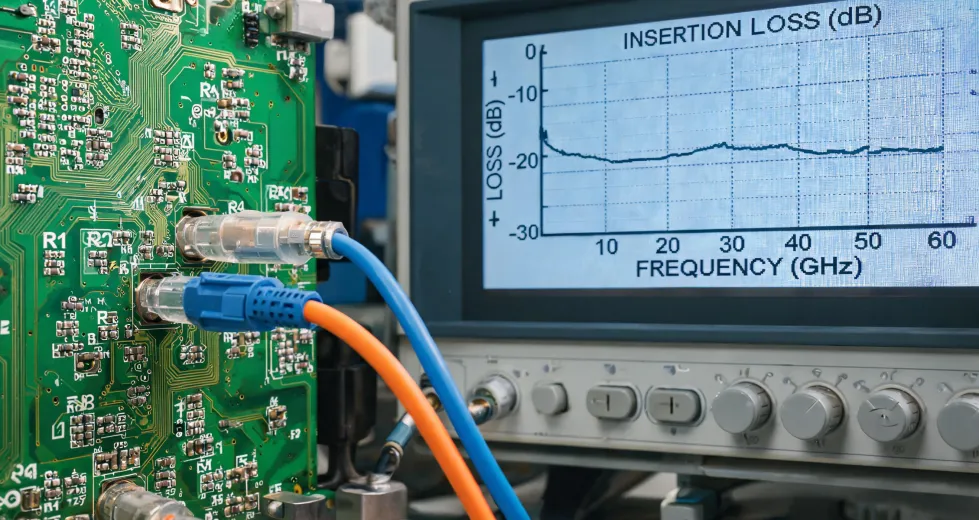
Here's something vendors won't tell you: the connector end-face quality on compatible XFPs varies more than you'd expect. I've seen LC connectors with visible scratches under 200x magnification on modules that passed a basic insertion-loss test. That's not a rejection criterion in most receiving specs — but it should be.
Why this matters now more than five years ago
When I started in this role, 'compatible' was almost a dirty word in our procurement group. The assumption was that third-party modules were a cost-cutting shortcut with hidden risks. And honestly? In 2019, that assumption had merit.
The ecosystem has matured. Today's compatible XFPs are not the same product category they were five years ago — the testing protocols are tighter, the reference designs are better, and reputable vendors now publish serial-level test data if you ask for it. The fundamentals of optical physics haven't changed, but the execution has.
The causation runs the other way from what most people assume. People think cheap modules fail more often. Actually, vendors that test thoroughly can afford to charge a fair price and stay in business — the fly-by-night operations are the ones who skip the burn-in. Price is a signal, not a cause.
The uncomfortable takeaway
I've only worked with mid-volume orders — a few hundred to a few thousand units at a time. If you're specifying for hyperscale deployments, your qualification process probably looks nothing like mine. My experience is based on roughly 240-unit batches and a handful of 50,000-unit annual contracts. Your mileage may vary.
But the core lesson doesn't: the word 'compatible' is a starting point, not a finish line. The vendors who earn repeat business are the ones who understand that quality is a process, not a sticker on a box.
And me? I still open the first carton myself. Every time.