First Tuesday in March 2024. 7:42 a.m. I was at my desk in the Vishay Yankton SD plant, drinking coffee that I should honestly call warm coffee-flavored water, when the phone rang. On the other end was a procurement engineer from a blue chip industrial controls company. They had rejected 12,000 units of Vishay foil resistor networks—networks built around Vishay foil resistors—because resistance read 0.02% high. At 10 kΩ, that’s 2 ohms above the absolute maximum spec.
Two ohms. That sentence is going to matter.
I’ve been in this plant long enough to know that precision parts fail for dramatic reasons: broken bonds, cracked substrates, moisture ingress. This didn’t look like any of them. A 10 kΩ foil resistor network that reads 10,002 ohms is suspicious because the failure modes that push foil resistors upward tend to be catastrophic, not subtle. So I did what any sensible quality person does: I pulled the lot history before I panicked.
These resistor networks used Vishay foil resistors as the sensing elements, configured in a voltage divider. The customer was using them in a temperature-compensation module for a high-voltage power supply. They needed absolute resistance accuracy because a 2-ohm error in one arm would shift a calibration voltage. That’s why they chose foil: it holds its value better than almost anything else under load and thermal aging.
I review roughly 150 to 200 lots a month—maybe 180, I’d have to check the system. When a blue chip customer rejects a precision lot, it’s not a small event. It triggers a containment notice, an email chain with three continents, and a report with “customer reported” in red. The first reaction is always to question your own process. The second reaction should be to question the measurement.
First, We Sweated. Then We Measured.
The lot history was clean. Q1 2024 audit said the product was within tolerance. Certificates matched the shipped data. The rejection came from their incoming inspection, where they had measured through a connector socket using a 2-wire DMM reading. The result: 10,002 ohms. On paper, that is outside if your tolerance is ±2 ohms. But 2 ohms is exactly the kind of number that can be eaten by a dirty contact or a worn test lead.
Here’s something vendors won’t tell you: when you see “0.01%” or “0.02%” on a Vishay foil resistor spec, that’s not a guarantee of what your probes will show. It’s a guarantee of the element’s resistance, measured in a controlled setup—typically 4-wire Kelvin, with a specified current and a known reference temperature. The datasheet’s test condition assumes you measure the resistor, not your test socket. (Should mention: the customer’s technician had swapped that socket two days before the failed test with a spare from a drawer. The original socket was still in the trash can.)
The Connector Was the Culprit
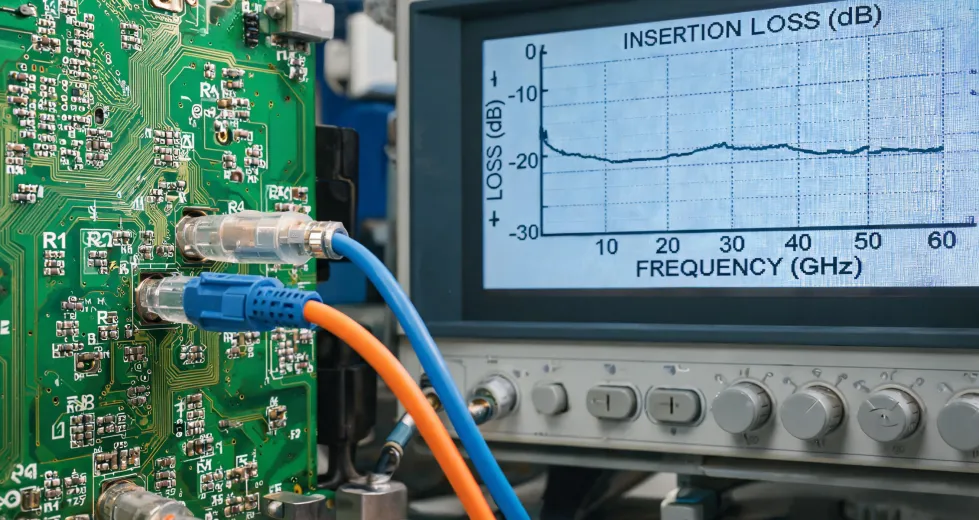
Our field engineer drove out to the customer’s facility. He took one of the rejected networks and measured it two ways. First, he pressed probes directly on the solder pads: 9,999.8 Ω. Then he measured through the exact socket used in their test: 10,002.0 Ω. The difference was the connector, not the resistor. About 2.2 ohms of contact resistance in the socket—old pins, benign to the naked eye, deadly to a 10 kΩ part specified at 0.02%.
We replaced the socket, cleaned the pins, and re-ran their full sequence. All 12,000 networks passed. The rejection was void. The customer paid for the re-test time, by the way. It was a fair outcome, and honestly it preserved the relationship better than a quietly accepted return would have.
Honestly, the easier move would have been to issue a return authorization and avoid the fight. The upside of pushing back: preserve a blue chip relationship and a clean shipping record. The risk: being known as the supplier who blames the customer. I kept asking myself, is 2 ohms worth potentially ruining a relationship? In the end, I knew the trust would be weaker if we silently accepted a false rejection.
The Toughbook vs Dell Rugged Parallel
O.K., here’s where the laptop thing comes in. People ask me about the Toughbook vs Dell Rugged debate all the time, usually because our own field engineers are rugged-laptop shopping. If you just say “I need a rugged laptop,” you haven’t said anything. Rugged to what? Drop height? −30 °C? Five minutes of rain? A forklift tire?
That’s exactly the mental model I use for precision parts. A specification is a contract, but the contract has a context. A Vishay foil resistor’s tolerance is only meaningful when you measure it the way the manufacturer intended. It’s not that one product is better if you test it with an inadequate setup. You’re comparing test artifacts, not parts.
So if you’re on the fence about a Toughbook vs Dell Rugged, the answer starts with your environment—not with a forum thread. Same for precision resistor networks. Define the measurement conditions before you define the product.
Lessons I Put in Every Requalification
There’s a reason Vishay’s published specifications for high-precision foil resistors, accessed January 2025, include a low-power measuring condition. It’s not a formality. It protects you from the exact situation I just described.
- Use 4-wire Kelvin measurement for anything below 1% tolerance—especially for foil resistors and resistor networks.
- Check your test fixture before you reject a lot. We found a socket worth $18 was causing a $42,000 rejection.
- If someone says “0.02% high,” translate that into ohms. At 10 kΩ, it’s 2 ohms. At 100 Ω, it’s 20 milliohms. The number changes the argument.
- If you buy from Vishay Yankton SD, ask for the measurement conditions in the datasheet. If we’re the supplier, we will always share them.
Bottom Line
What most people don't realize is that a lot of precision-component “failures” are really measurement failures. The product was fine. The socket was not. I’ve seen this pattern with high-accuracy Vishay foil resistors, and I’ve seen it with laptops. Without a clear test environment, the comparison—whether Toughbook vs Dell Rugged or a resistor network against its spec—is basically fantasy.
Know your measurement. It’s the cheapest fix in the building.