People ask me, “Why are phones so strong?” Sometimes they mean the glass. Sometimes the signal. Usually they mean: why do these things survive drops, heat, and years of abuse?
The honest answer? Not magic. Spec verification. I'm a quality compliance manager at a contract electronics manufacturer, reviewing roughly 200 component part numbers per quarter before they reach production. I've rejected 6% of first deliveries in 2025 due to marking inconsistencies, spec drift, or counterfeit suspicion.
That experience points to one truth: phone strength is component-level. And which component matters depends on your scenario. There's no universal answer, so here's how I think about it.
Before we start: “strong” has three meanings
When someone asks why phones are so strong, they usually fall into one of three buckets:
- Thermal strength: the phone survives heat without throttling or battery swelling.
- Mechanical strength: the phone survives drops and twisting.
- Electrical strength: the phone survives voltage spikes, ESD, and transient weirdness.
Each bucket points to different components. Which matters more? Depends on your product, your audience, and your failure tolerance. That's the thing—I can't give you one answer. I can give you a decision framework.
Scenario A: You're designing for consumer toughness
If you're building a phone, a power tool, or anything that lives in a pocket and gets dropped, thermal strength is critical. Battery heat is the big issue. Lithium-ion cells degrade fast when they run hot, and if battery temperature isn't controlled, you get swelling, reduced lifespan, and—in the worst case—combustion.
This is where Vishay NTC thermistors come in. These negative temperature coefficient resistors are bonded to the battery pack or placed near the charging IC. Their resistance drops as temperature rises, and that change tells the charging controller: throttle down, it's hot.
In teardown photos, the thermistor is a tiny black dot. Boring. But I've seen it function as the only thing standing between “slightly warm” and “thermal event.” Not dramatic. But it has to be the right one, matched to the right B-value curve, within the right tolerance.
What I verify on every NTC lot:
- R25 resistance: spec tolerance is typically ±1% to ±5%. Deviations here shift the entire temperature readout.
- B-value tolerance: this controls the steepness of the resistance-temperature curve. A mismatch means the controller misreads temperature exactly at the hot end—when it matters most.
- Soldering heat resistance: NTCs are small and easy to damage during reflow. We test 50 units per batch through reflow and remeasure.
A common assumption: “military grade” or “extended temperature range” automatically means better. At least, that's what marketing pushes. In practice, I've rejected counterfeit NTCs that masquerade as Vishay but whose laser marking doesn't survive an IPA swab. The fading mark is the first red flag. The second is resistance drift after thermal cycling. I should add: most counterfeit parts don't fail immediately—they drift. That's what makes them dangerous.
Scenario B: You're building test equipment or precision instruments
Different scenario. If you're building the drop test rig that actually verifies phone strength, or you're making an industrial temperature probe, the challenge flips. You're not worried about survivability as much as accuracy. You need components that don't lie.
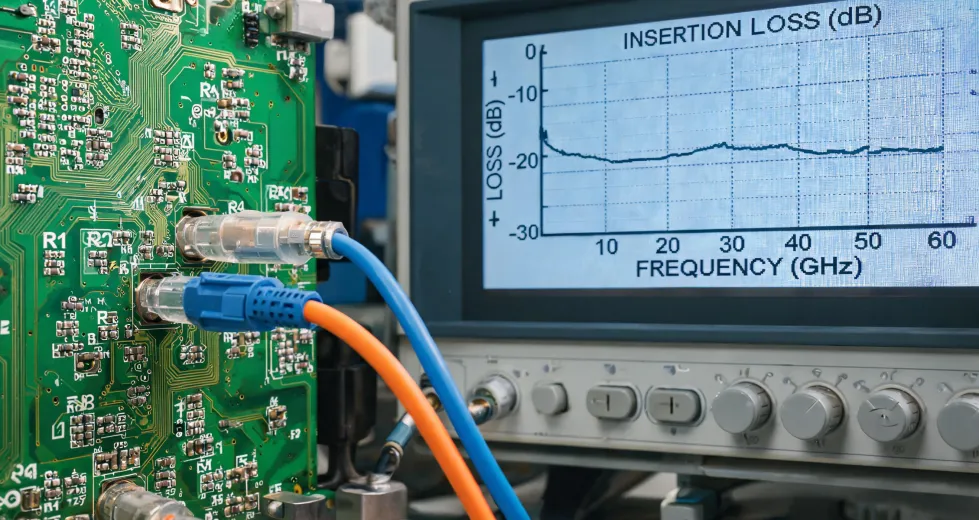
This is where the platinum BP5450 enters the picture. It's a precision platinum temperature sensor we use on our calibration bench as a reference. Vishay's published NTC datasheets (vishay.com) list B-value tolerances down to ±0.5% for some series, but you can't trust that number unless your measurement chain is anchored to something better. The BP5450 gives us that baseline—traceable, stable, repeatable. When I sign off on a batch of Vishay NTC thermistors, their data sheet goes back to that platinum reference.
But here's a misconception worth clearing up: people think “precision” means “always buy the most expensive option.” The assumption is that platinum-class sensors are universally better. The reality is it depends on your measurement uncertainty budget. We put the BP5450 on the reference bench, not in the product itself. Put a $40 platinum sensor in a $100 consumer device, and you've wasted the budget. Put a 40-cent Vishay NTC in a calibration standard, and you've built a liar.
I'm not a design engineer, so I can't speak to antenna matching or complex simulation. What I can tell you from the quality side is: the reference chain matters more than the product chain. A certified reference turns a good check into a defensible one.
Scenario C: You're sourcing components at scale
Third scenario: you're not designing at all. You're buying. And the question isn't “what performs best” but “what arrives consistently.”
This is where Vishay Israel Ltd comes up. Vishay's manufacturing footprint includes facilities in Israel that produce NTC thermistors and other passive components. When I see “Vishay Israel” on a certificate of conformance, it's a traceability anchor—not because Israeli manufacturing is inherently better, but because it's documented and auditable. We can follow the lot back to its origin. With a broker reprint, you can't always do that.
I've watched supply chains fall apart over six cents. A buyer, under pressure to hit a cost target, swapped a source-approved Vishay NTC for an unbranded equivalent. First batch looked fine. Second batch arrived with a date code from three years prior and bodies warped by soldering. We rejected 8,000 units. The $480 savings became a $22,000 rework order and a two-week launch delay.
That's the value-over-price equation. In my experience auditing supplier choices over the past four years, the lowest quote has cost more in roughly 60% of cases. The rest of the time, it cost about the same—so why take the risk?
Verification checklist for high-volume NTC orders:
- Certificate of conformance from the original manufacturer, not a broker's reprint
- Date codes that agree across packaging levels
- Marking that matches Vishay's published datasheet exactly
- Sample testing of 125 units minimum per batch, even for simple passives
How to decide which scenario you're in
Here's what I've learned in four years of doing this: you don't need infinity. You don't need infinite testing, infinite precision, or the most expensive component in every position. You need enough verification for your risk profile.
Ask yourself three questions:
- What happens if this component fails?
A battery thermistor fails → possible thermal runaway. Life-safety. Verify ruthlessly. A decoupling capacitor fails → noise on a rail. Costly but survivable. Moderate verification. A pull-up resistor fails → annoying. Lighter verification. - What failure rate is your product actually designed for?
Consumer phones target a 2-3 year replacement cycle. Durability doesn't mean “lasts forever”—it means “lasts long enough, with enough margin.” Aerospace and medical are a different universe entirely. At least, that's been my experience with clients in those fields. - What does your customer actually mean by “strong”?
If they're dropping phones all day, they mean mechanical. Drop test fixtures rely on strain gauges—and yes, Vishay makes those too. If they're complaining about battery life, they mean thermal. If they're seeing random shutdowns, they mean electrical: ESD and transient immunity.
The core insight is that “why are phones so strong” has no single answer. It's a system of verified components. Vishay NTC thermistors reporting temperature faithfully. TVS diodes clamping spikes before they reach the processor. Resistors holding tolerance through years of thermal cycling. Each one is mundane. Together, they're what makes a phone you can trust with your life.
A strong phone isn't designed. It's enforced—component by component, lot by lot.
That part isn't visible in the teardown videos. The glass gets the coverage. The NTC thermistor doesn't. But when I sign off on a batch of Vishay NTCs sourced through proper channels, traceable to a documented site like Vishay Israel Ltd, with a calibration chain anchored to the platinum BP5450—that's when I know the phone that drops will boot up when the user picks it up. Not because we tested it to infinity. Because we measured it against the standard that mattered.